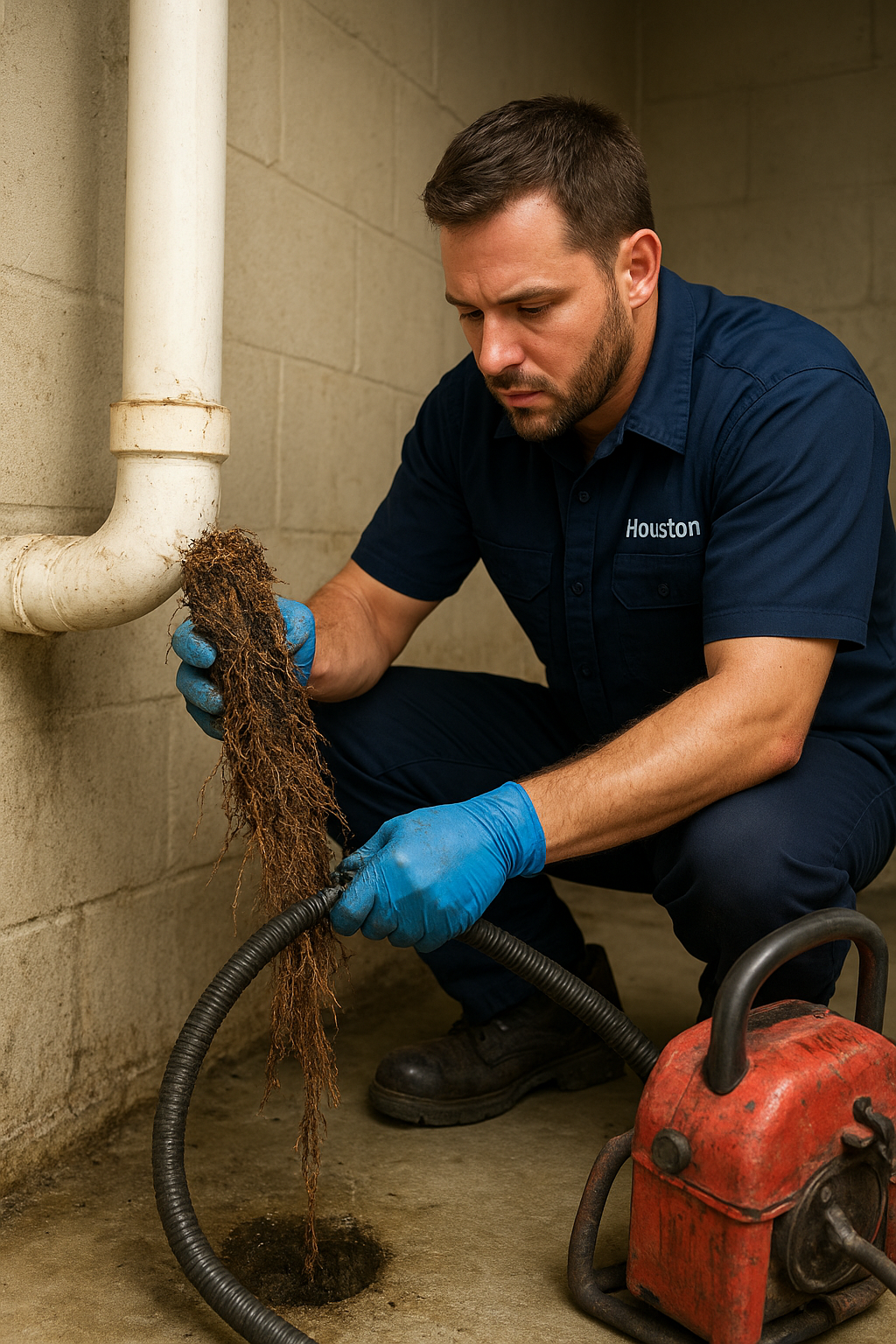
Houston's subtropical climate keeps soil moisture high year-round, driving live oak and pine roots toward sewer lines in neighborhoods like the Heights and Montrose. Older clay pipes installed before the 1970s crack easily under root pressure, especially where homes sit on the flat, poorly draining terrain common in Harris County. A single intrusion often starts at a joint and spreads quickly during the wetter spring months when roots grow aggressively.
Homeowners in River Oaks and Midtown frequently discover roots after repeated backups because the mild winters never fully slow root growth the way colder climates do. Camera inspections reveal how roots can travel several feet inside the line before causing a full blockage, and partial cuts without follow-up treatment allow regrowth within one season. Excavation in these dense urban lots risks damaging mature trees or underground utilities that run close to sewer mains.
Trenchless options work well here when the pipe is still structurally sound, but heavy root mats in Sugar Land or Pearland properties often require section replacement to meet current Harris County drainage standards. Skipping chemical follow-up after mechanical removal leaves the job incomplete because the same moisture-seeking roots return to the repaired joint within months.
Technician insight
In Houston the thing that catches most people out with Root Intrusion Removal is how fast roots return in the clay-heavy soil around live oaks in River Oaks and the Heights. Homeowners often think one good cutting solves it, but without the follow-up chemical in our mild winters the same roots hit the joint again inside a year.
Heights Home with Recurring Backups
A 1940s bungalow in the Heights had slow drains after heavy spring rains. Camera showed live oak roots filling a cracked clay joint under the side yard. We cut the roots with hydro jetting, applied chemical treatment, and lined the damaged section. The line has stayed clear through the following summer and fall.
Root Intrusion Removal Services We Offer
✓Camera Inspection for Root Intrusion
Locates exact entry points and extent of root growth inside sewer lines serving Heights and Montrose homes before any cutting begins.
✓Hydro Jetting Root Removal
High-pressure water clears dense root masses from clay and cast-iron pipes without excavation in River Oaks and Midtown properties.
✓Mechanical Root Cutting
Powered cutting tools remove established roots at joints common in pre-1970s Houston housing stock while preserving pipe integrity.
✓Chemical Root Treatment
Foam or liquid treatments applied after cutting prevent regrowth in the humid Harris County soil conditions around Downtown and the Heights.
✓Trenchless Pipe Lining Post-Root Damage
Epoxy lining seals joints after root removal in older lines under Midtown and Montrose streets where digging would disrupt mature landscaping.
Root Intrusion Removal Cost in Texas
| Service | Typical Range | What Affects It |
|---|---|---|
| Camera Inspection | $225–$375 | Higher in tight-access lots near Downtown or Montrose |
| Hydro Jetting Root Removal | $650–$1,100 | Varies with length of affected line and root thickness |
| Mechanical Cutting Plus Treatment | $550–$950 | Includes one follow-up visit if regrowth occurs within 90 days |
| Trenchless Lining After Clearing | $2,800–$4,200 | Required when roots have separated multiple joints in older clay pipe |
Ranges are typical for Texas and confirmed with an exact written quote before any work starts.
How it works
- 1
Site Assessment
Camera inspection maps root locations and pipe condition in the specific lot, noting tree proximity in neighborhoods like the Heights.
- 2
Root Clearing
Hydro jetting or mechanical cutting removes the intrusion while protecting nearby utilities common in dense Houston blocks.
- 3
Treatment Application
Chemical root inhibitor is applied to slow regrowth driven by Houston's year-round soil moisture.
- 4
Flow Verification
Final camera run confirms clear flow and identifies any remaining weak joints before leaving the site.
Pricing
Cost depends on pipe depth, root density, and whether trenchless lining is needed after clearing.